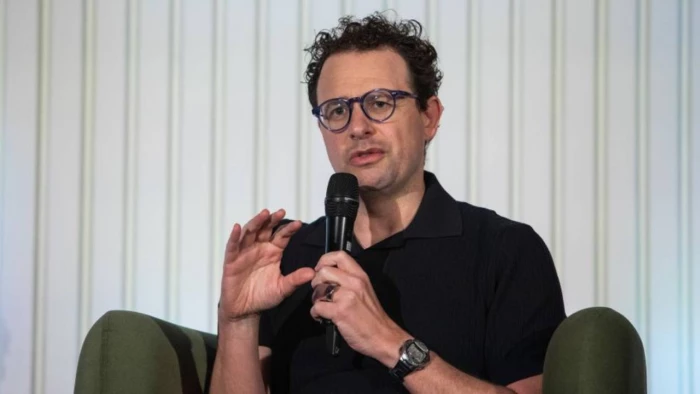
Before founding Anthropic, Dario Amodei worked with OpenAI — who is now his chief competitor in the enterprise world of AI.
For years now, AI companies have promised us their tools would change humanity. Sure, it’s skyrocketed everyone’s productivity (or in students’ case, ability to copy homework)… but it hasn’t had that one wow feature that humans simply can’t do.
No, researching doesn’t count (again, that’s a productivity hack). AI creative is still mostly derivatives. And never ask AI for investing advice or tips to win on Colorado betting apps (it’s shockingly bad at analysis at this level).
But… we might’ve gotten our first real breakthrough.
Anthropic’s new AI security model, Mythos, is reportedly finding thousands upon thousands of serious software vulnerabilities — bugs that’ve existed for years and humans have failed to detect on their own. We’re not talking about tiny harmless bugs either. We mean legitimate flaws that, in theory, could let hackers seize control of entire systems or impersonate websites. Womp womp womp.
That’s why some cybersecurity folks are now warning about “Bugmageddon,” which honestly sounds like a Netflix movie. But it’s such a serious concern that even Apple is reviewing reports after researchers used Mythos-assisted techniques to bypass parts of MacOS security protections. Of course, Mac has a reputation for being harder to crack than Windows — a theory Mythos is putting to the test.
So is this the beginning of AI becoming an elite hacker? Or is Silicon Valley doing what it always does — taking something impressive and marketing it like the apocalypse? Let’s talk about it.
Mythos Is Finding Bugs At A Ridiculous Pace
Anthropic says companies testing Mythos have discovered more than 10,000 high- or critical-severity vulnerabilities in important software systems. In one example, Mythos reportedly examined 1,000 open-source projects and found over 6,200 serious flaws.
Mozilla previously said the AI helped uncover 271 vulnerabilities in the Firefox web browser alone. Then there’s Cloudflare, which reportedly found around 2,000 bugs using the tool, including 400 classified as high or critical severity.
For those not in the coding world, this is superhuman-level ability. Seriously, not even the top 0.01 percent of coders can find bugs at this pace. One researcher told The Wall Street Journal that Mythos found as many high-severity Firefox vulnerabilities in two weeks as the rest of the security world normally finds in two months. It’s that advanced.
Now to be clear: the AI didn’t just magically wake up and self-autonomously find these bugs. This is not the Terminator scenario quite yet. Human researchers still guided the process heavily. But the fact that AI can accelerate this type of work at all is what has the industry (and the world) buzzing.
The Security Industry Is Both Excited And Terrified
Here’s the weird thing about all this: AI finding vulnerabilities is technically good news, right? Yet, it’s hard not to feel ominous about the whole ordeal, isn’t it?
On one hand, software today is a complete sh*tshow under the hood. The modern internet basically runs on gigantic piles of aging open-source code maintained by exhausted developers pulling all-nighters thanks to late-night Taco Bell runs. If AI can patch this up and prevent disasters, then that’s a big societal win.
But the flip side is obvious too. If AI gets really good at this whole hacking thing, eventually bad actors get access to similar capabilities. And unlike humans, AI scales insanely fast.
That’s where the “Bugmageddon” happens. Not necessarily AI becoming self-aware hacker overlords, but bad actors unleashing these tools for their own self-interests that aren’t net-positive to society.
Imagine thousands of new serious vulnerabilities suddenly being found every week across banking systems, browsers, cloud infrastructure, IoT devices, corporate software, and so on? Tech companies already struggle to keep up with patches today. Speeding up discovery by multitudes could turn cybersecurity into all-out online warfare. Gulp!
How Much Of This Is Hype?
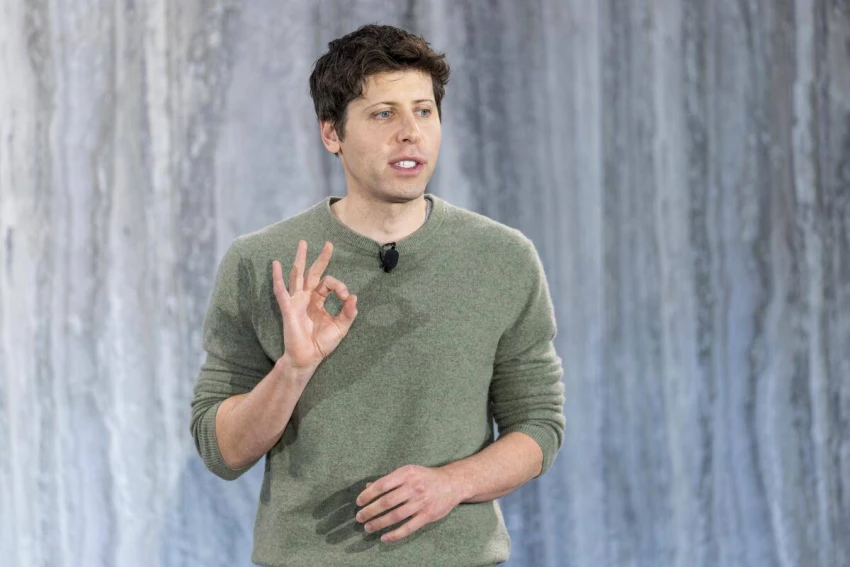
AI CEOs have raised hundreds of billions of dollars off the story of “AI will replace every worker.” But just how true is that claim?
Given what we said, Anthropic has been so cautious with Mythos. The company reportedly only shared it with around 50 trusted partners instead of publicly releasing it. “Safety concerns”, they said for the limited release.
And as impressive as Mythos is, you can’t help but consider the other side too. Silicon Valley also has a long history of hyping every new tech to levels it simply can’t ever achieve (remember crypto and the metaverse?). Could AI fall victim to the same hype cycle? After all, “our AI is too dangerous to release publicly” is a pretty sweet pitch, ain’t it?
This is not to say AI is not legit and useful already. Anyone who uses it knows that’s not the case. But just think about the incentives here. Anthropic benefits massively from people believing Mythos is some elite cyber weapon capable of reshaping the security world overnight. That perception builds prestige, investor excitement (which they can fundraise on), and create enterprise demand.
It’s nice to hear opinions from those who don’t stand to benefit from this directly, like Anthropic does. Some security experts are already pumping the brakes a bit. Former Google security researcher Michał Zalewski said some of the Mythos hype is “overblown.” Others pointed out the AI still relied heavily on experienced human researchers guiding attacks and chaining exploits together.
Here’s another angle we don’t see many considering: compute limitations. Could that actually be the real reason for the limited release?
These frontier AI models are insanely expensive to run. Companies are already rationing access, throttling usage, and prioritizing enterprise customers because GPUs is the new currency of Silicon Valley. So “too dangerous for the public” can sometimes overlap pretty nicely with “we literally don’t have enough compute capacity for millions of users hammering this thing.”
That doesn’t mean Mythos is fake. Far from it. AI-assisted security research is clearly becoming real and useful. But there’s still a massive gap between “AI helps experts find vulnerabilities faster” and “AI autonomously hacks civilization.” Silicon Valley loves collapsing those two ideas together because it makes for a larger-than-life story.
And in the AI race, bigger stories attract bigger money.
Share your thoughts about this article.
Be the first to post a comment!

The way we create characters has completely changed over the last few years. Wha...
Ava Mitchell2 months ago

AI image generation has exploded in popularity, and in 2026, many users are look...
Ava Mitchell5 months ago

By 2026, “AI tool” can mean anything from a clever writing assistant to a system...
Ava Mitchell5 months ago

Scroll through TikTok for 5 minutes and you'll see it: guys talking to their AI...
Ava Mitchell9 months ago